Brands have always found ways to collaborate with influencers on products.
I can think of hundreds, but my personal favourites include Jackie Aina's iconic palette collaboration with Too Faced, a partnership that forced the beauty industry into a long-overdue conversation about shade inclusivity. Or MrBeast turning attention into appetite with a line of chocolate bars with Feastables. Even Mel's Maple Matcha, a drink that exists purely because Melissa Holdbrook-Akposoe’s (Melissa’s Wardrobe) recommendation carried enough weight for a company to make a new product around it.
The formula is straightforward: identify a influencer with the right audience, attach their name or aesthetic to a product, let their community do the rest. This model has existed for decades. And it works because (when the match is right) the results are remarkable.
But something has shifted in the last twelve months. The most talked-about influencer-brand partnerships are taking that formula a step further. They're focusing not only on what influencers can sell but what they can become.
What 'Creator as Product Feature' Looks Like
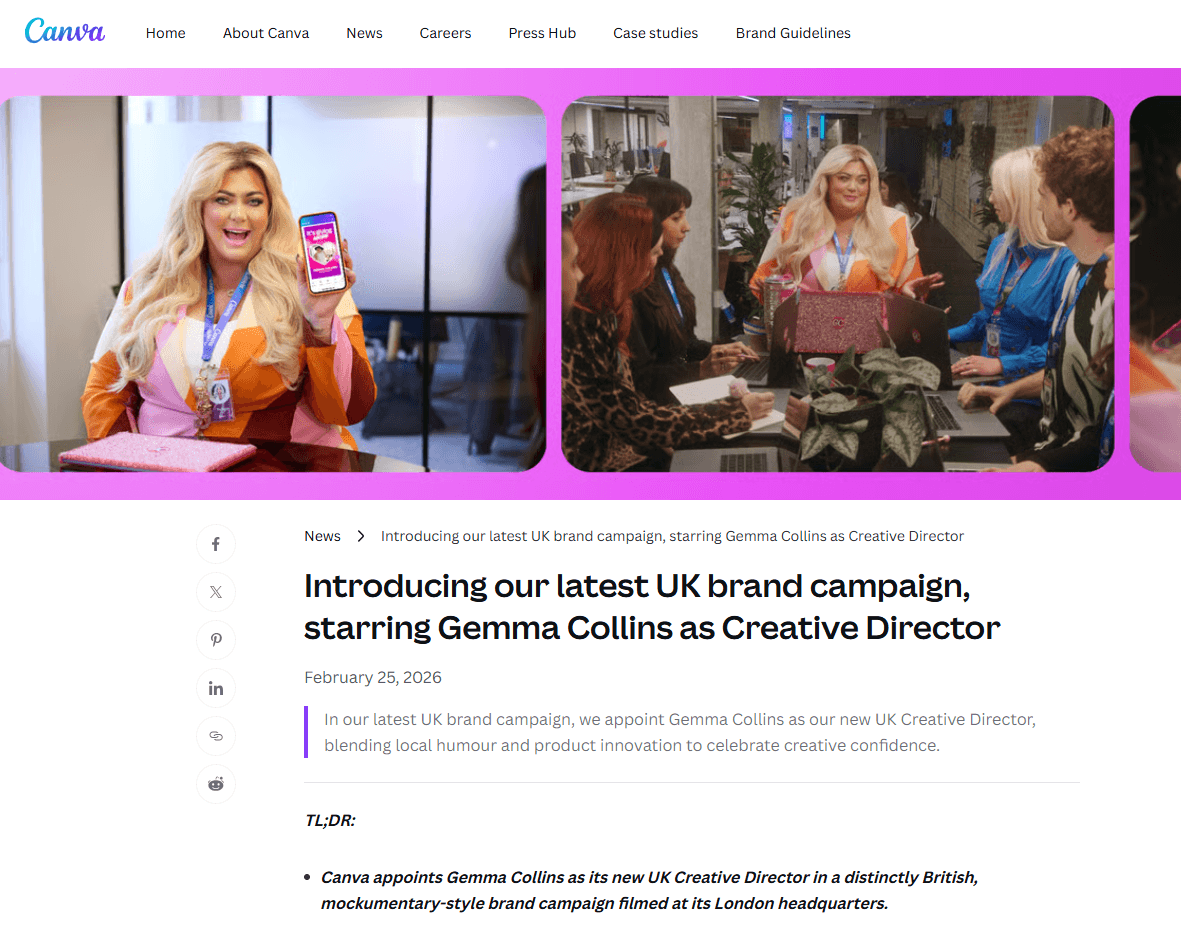
In February 2026, Canva launched a UK campaign that caught the industry's attention. They appointed Gemma Collins as their mock-UK Creative Director. Rather than letting that partnership end in a campaign, they layered a product decision on top of it. Her voice was built into the platform, a Magic Write tone-of-voice toggle called ChatGC that lets UK users write in full GC mode. This way, they effectively productised her personality.
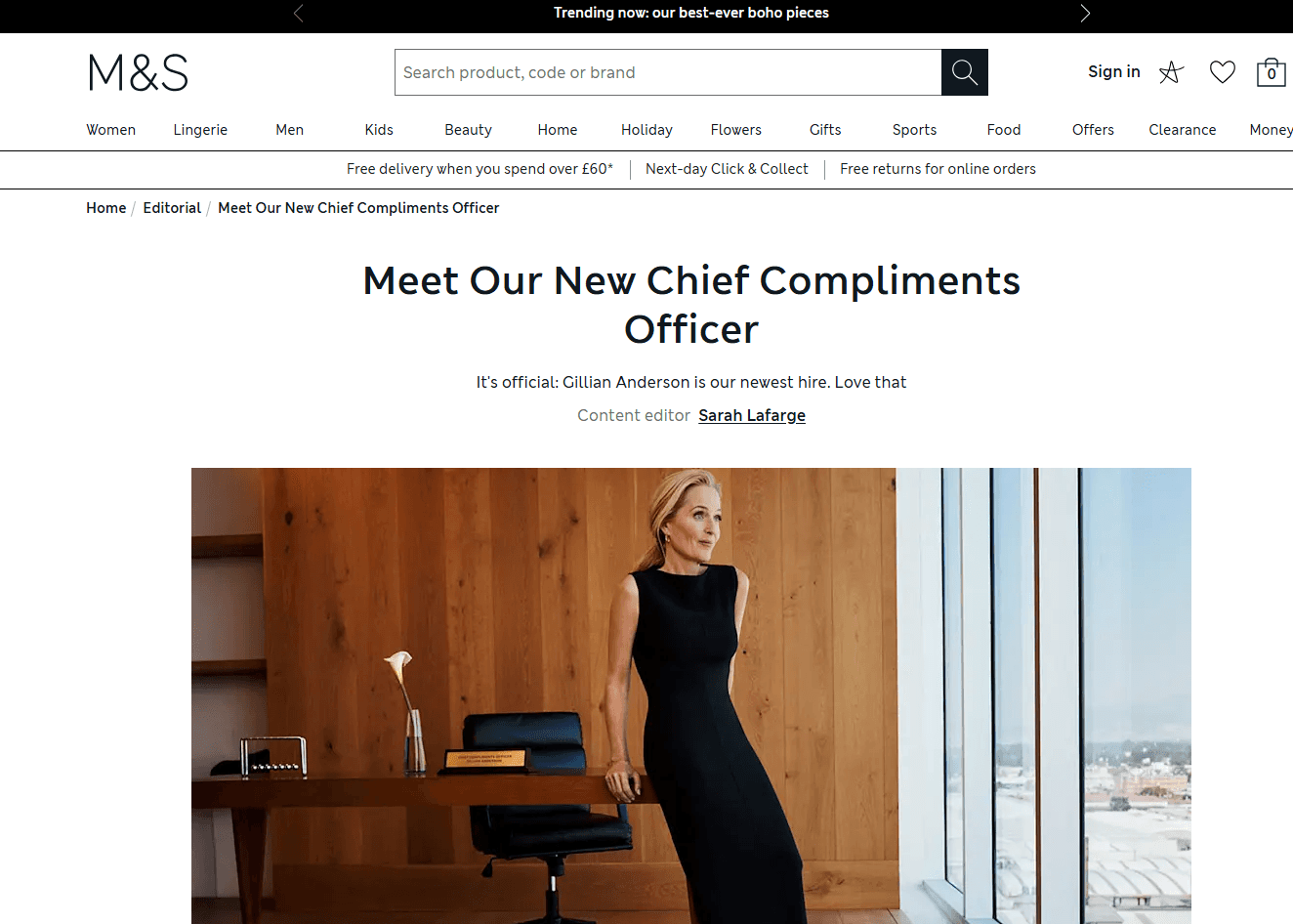
A few weeks later, Marks & Spencer appointed Gillian Anderson as their first ever Chief Compliments Officer, timed to the launch of their Spring 2026 womenswear collection. Also, a mock role, this partnership turned the warmth, quiet authority, and wit that Anderson has spent a career embodying into the brand's actual behavioural proposition for the season.
In both cases, the influencer wasn’t positioned around the product. The influencer was the product.
The Rise of Integration Over Influence
These two campaigns didn't emerge from nowhere. They represent the sharpest expression of a direction influencer marketing has been building toward for years.
What the best influencer -brand partnerships of the last year have in common is that they treat influencers not as campaign assets but as brand architects - people whose specific identity, values, and cultural positioning shape what the brand does and means, not just how it's promoted.
For most of influencer marketing's history, even the best partnerships were additive: the brand existed, the influencer promoted it. Now the most interesting work is integrative: the creator and the brand make something together that neither could make alone.
Canva without Gemma Collins is a design tool. Canva with ChatGC is a product that has a sense of humour about itself, that invites users to be bold and unbothered and a bit diva-ish, which turns out to be exactly what 'anyone can design' looks like when it's given a personality. M&S without Gillian Anderson is a retailer with a strong spring collection. M&S with a Chief Compliments Officer is a brand that has found a behavioural expression for the warmth it's been building toward for years and found the right face for it that audiences trust instinctively.
You can see it in other brand partnerships as well.
Take Molly-Mae Hague’s role at PrettyLittleThing. Moving from ambassador to a real-life Creative Director role, her influence extended into product direction, pricing, and positioning. The brand didn’t just borrow her audience, it built with her perspective.
Or Marks & Spencer’s collaboration with Melissa’s Wardrobe, turning her #MelMadeMeDoIt product recommendations into a structured, shoppable content series — Love That. Something that already existed organically was formalised into a repeatable part of the brand’s model.
Or perhaps the most OG example, the partnership that still defines the category and will be referenced for decades to come – Nike and Michael Jordan (Air Jordan). Nike and Michael Jordan didn’t just create a campaign. They created an entire product line, a cultural identity, and a commercial engine that still exists decades later. Air Jordan was a world that only worked because it was inseparable from Jordan himself.
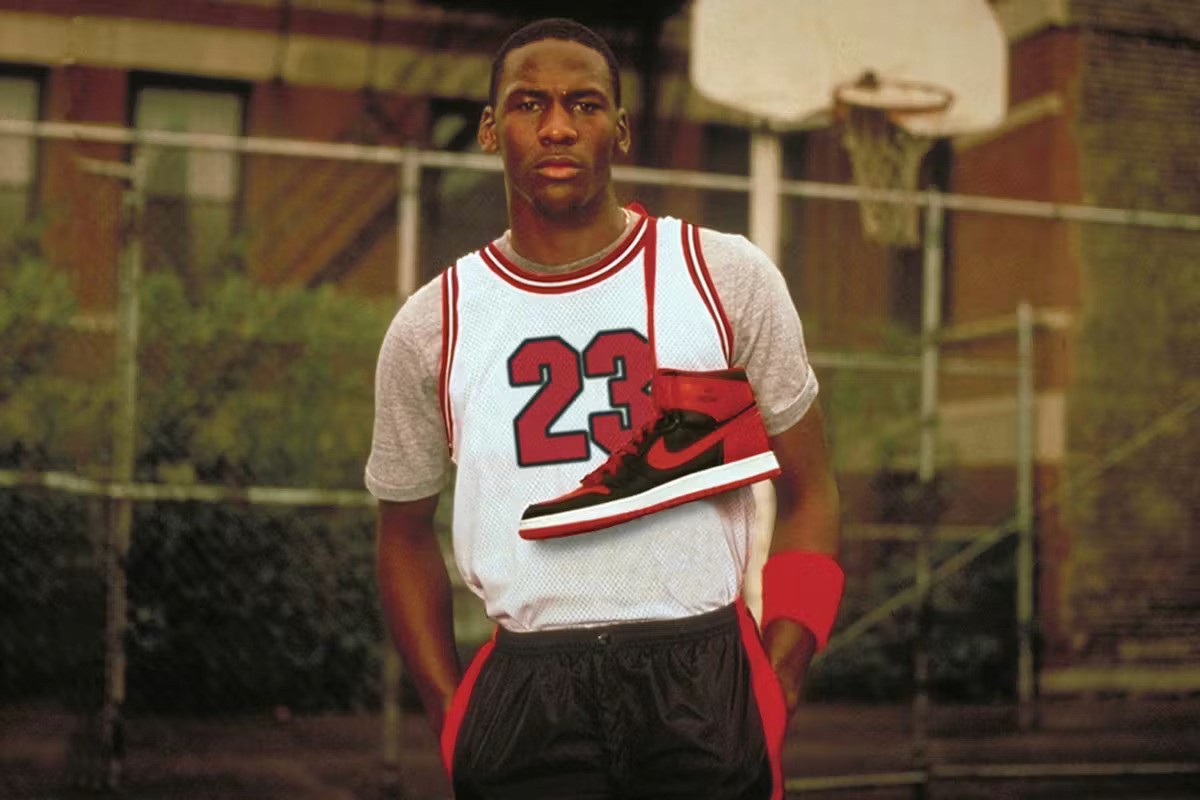
What connects all of these is the same philosophy: the influencer isn’t decorating the brand. They’re defining it.
The Anatomy of a Partnership That Works
The campaigns above share a common structure, even though they look very different on the surface. In each case:
The influencer's identity extended the brand’s. An influencer who complements a brand adds something to it. An influencer who extends it makes the brand feel like a natural part of their world.
The collaboration went beyond content. Canva built ChatGC. M&S invented a role. Nike created a shoe. In every case, the influencer's involvement went somewhere the social post couldn't.
The audience didn't need to be convinced. When a partnership is right, it produces a specific reaction in the audience: recognition. People don't think 'that's a good campaign.' They think 'of course.' That 'of course' moment is what brands are chasing, and it only comes from genuine fit.
If this evolution changes anything practically, it changes the questions brands ask at the start of an influencer partnership. Before you choose your next influencer, ask yourself:
Does this influencer's identity extend ours or just reach our audience? Reach is table stakes. Identity extension is the differentiator. The question isn't only 'do their followers match our target demographic?' It is also 'does this person's world make our brand feel more itself?'
Where could this influencer's presence live beyond a post? If the honest answer is 'nowhere,' the partnership probably isn't worth its potential. The campaigns that generate real cultural impact create something - a product feature, a role, a content series, a brand behaviour that wouldn't exist without the influencer.
Would this partnership need explaining to their audience? If the answer is yes, reconsider. The best influencer-brand fits generate that 'of course' response. If you're preparing messaging to justify the collaboration, you've probably chosen the wrong person.
About Sway Me Good
Sway Me Good helps brands run paid collaborations, gifting, UGC, and affiliate campaigns within a single platform—with built-in creator matching, execution, and performance tracking.
Ready to see what strategic creator marketing can do for your brand?
Email gad.harari@swaymegood.global or click below to book a 20-minute discovery call.
New
20 min
The Art of Valuing Influencers
Support for various content types such as articles, blogs, videos, and more. Rich text editor with formatting options for enhanced.

Gad
May 14, 2024

New
20 min
The 20 Best Influencer Marketing Agencies in the UK (2026)
Support for various content types such as articles, blogs, videos, and more. Rich text editor with formatting options for enhanced.
Gad
31 March, 2026

New
20 min
Top 7 Strategies to Scale Influencer Marketing in Agencies
Support for various content types such as articles, blogs, videos, and more. Rich text editor with formatting options for enhanced.
Gad
30 July, 2024

Affiliate Marketing


Connect to our network and run influencer affiliate marketing campaigns.

SwayMatch AI

A match made in heaven. Work authentically, at scale.